


Executive summary
Between July 6 and July 29, 2026, the Prime Headshots research team, led by founder Shrikant S., reviewed 14,506 public LinkedIn profiles belonging to employees of 608 US-based companies spanning technology, fintech, recruitment, real estate, banking and law. The goal was simple: quantify how professionals actually present themselves on the world’s largest professional network, and measure what a profile photo does (or does not) do for engagement.
The headline finding is stark. Only about 50% of professionals on LinkedIn use a genuinely professional headshot. The other half either use a selfie, a casual photo or an old blurred image (about 40%), or no profile photo at all (about 10%). Adoption is not evenly distributed: trust-driven, client-facing industries like finance and law lead by as much as 3x over technology, and a professional headshot correlates with measurably higher engagement, about 30% more likes, reactions and comments.
| Profile photo status | Share of professionals | What it looks like |
|---|---|---|
| Professional headshot | ~50% | Purpose-shot or professionally styled portrait |
| Non-professional photo | ~40% | Selfie, casual photo, or old blurred image |
| No profile photo | ~10% | No photo uploaded at all |
- 50% carry a professional headshot; 40% use a selfie, casual or blurred photo.
- 10% have no photo at all, and those accounts are almost never active.
- Finance and law out-adopt technology by up to 3x, and headshots lift engagement by ~30%.
Methodology: sample, scope and how we classified
This study was designed and led by Shrikant S., founder of Prime Headshots, with a small internal review team. We drew the sample from public employee rosters of 608 US-based companies and reviewed 14,506 public LinkedIn profiles between July 6 and July 29, 2026. Every profile photo was manually classified against written criteria, alongside a check of public activity signals such as posting cadence and connection counts. Because the data is observational and cross-sectional, we report shares and correlations, not causal claims.
| Attribute | Value |
|---|---|
| Sample size | 14,506 LinkedIn profiles |
| Companies | 608 |
| Verticals | Technology, Fintech, Recruitment, Real Estate, Banking, Law |
| Geographic scope | United States |
| Collection window | July 6 to July 29, 2026 |
| Method | Manual review of public profiles + activity signals |
- Manual classification: each public profile photo was reviewed against fixed criteria for professional, non-professional, or missing.
- Cross-verified signals: posting cadence, connection counts and activity windows were logged alongside each photo.
- Transparent rounding: shares are rounded to the nearest 5% for readability, so minor totals can exceed 100%.
Finding 1: Half of professionals are missing a professional headshot
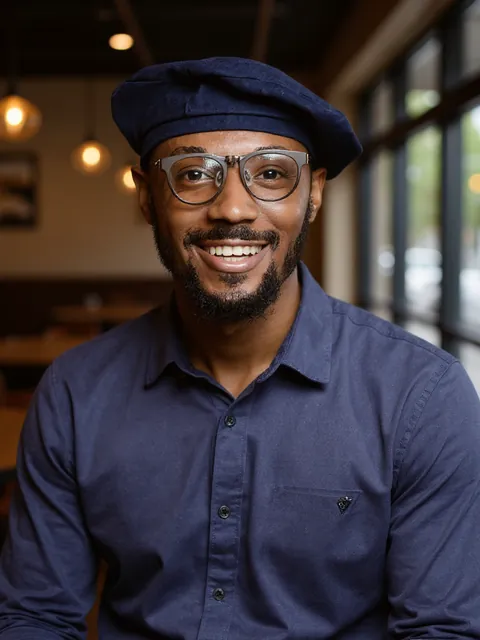
A professional headshot is the single most visible element of a LinkedIn profile, yet only half of the profiles we reviewed had one. One in ten profiles had no photo at all, and those accounts were almost universally inactive. The other 40% had a photo that undercuts credibility: a cropped selfie, a party snapshot, or a ten-year-old blurred image.
The practical implication is an opportunity, not a tragedy: in a network where half of professionals look unpolished, a single high-quality headshot immediately differentiates a profile.
| Segment | Share | Commentary |
|---|---|---|
| Professional headshot | ~50% | Benchmark to beat, half the network already clears it |
| Selfie / casual / blurred | ~40% | Large pool of profiles that actively undercut trust |
| No photo at all | ~10% | Accounts that almost never post, mostly dormant |
Finding 2: Attire is a de-facto uniform, navy and black dominate
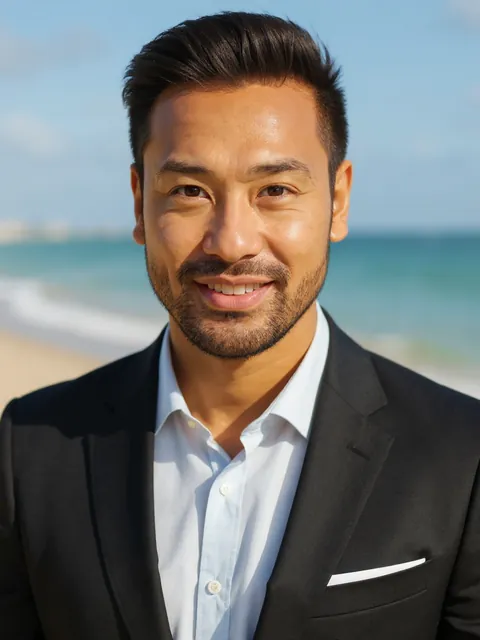
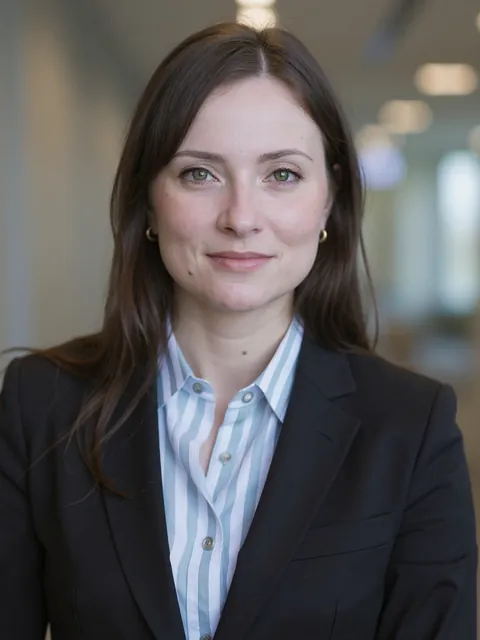
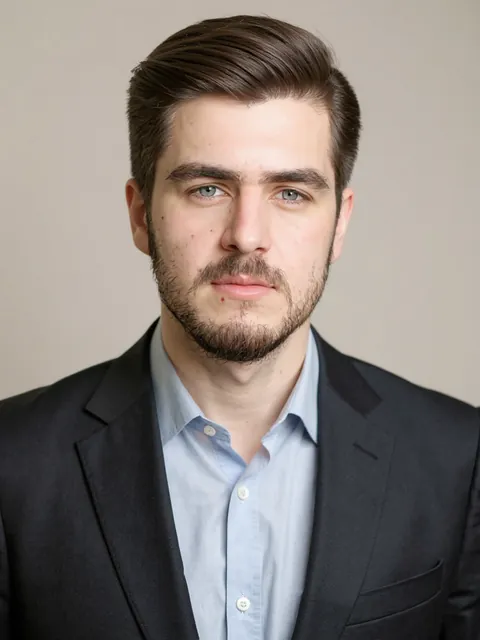
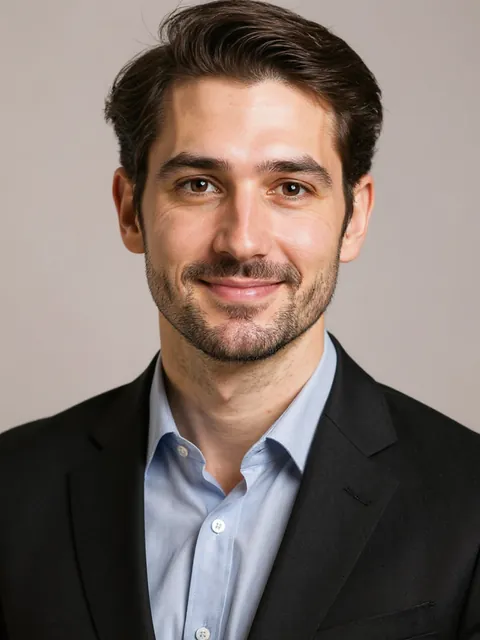
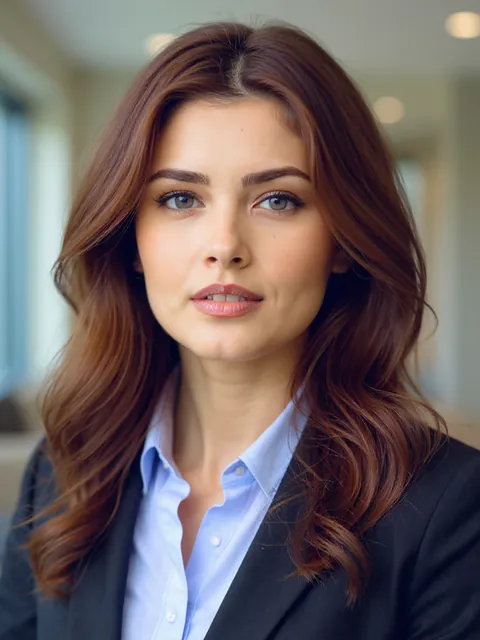
Among professionals who did have a professional headshot, dress code was strikingly consistent. More than 8 in 10 men wore a navy or black suit, and more than 8 in 10 women wore a professional work suit. Dark, formal tailoring reads as competence and trust, the visual vocabulary of an established professional, and the data shows it is the overwhelming norm.
Looking closer at garment choice, the majority of men preferred a pull-on blazer, the uniform pattern across real estate, while a 3-piece suit was the first choice for law and banking professionals and formal or casual shirts, sometimes with a pull-on blazer, ruled in technology and IT. For women, a formal suit dominated professional profile photos, with sheath dress, pencil dress, smart casual blazer and formal shirt as the popular alternatives.
| Group | Dominant attire | Share |
|---|---|---|
| Men | Navy or black suit | >80% |
| Women | Professional work suit | >80% |
| Group | Preferred attire | Notable variations |
|---|---|---|
| Men | Pull-on blazer | 3-piece suit first choice in law and banking; formal or casual shirts in tech and IT |
| Women | Formal suit | Sheath dress, pencil dress, smart casual blazer and formal shirt |
Finding 3: Backgrounds, solid colors win and white leads
More than half of all professional headshots, about 60%, used a solid color background. The remaining 40% favored office backdrops, outdoor and nature settings, or skyscraper views from a window. Among solid-color backgrounds, white is the single most popular choice at 35%, followed by shades of blue at 20%, dark grey and black at 16%, and shades of red at 12%; the final 17% used other varied colors.
The takeaway for anyone choosing a headshot background: clean, neutral solid colors, especially white and blue, are the industry norm, and they travel best across job boards, CRMs and internal directories.
| Background style | Share of professional headshots |
|---|---|
| Solid color | ~60% |
| Office / desk setting | Notable alternative |
| Outdoor / nature | Notable alternative |
| Skyscraper view from window | Notable alternative |
| Color | Share of solid-color backgrounds |
|---|---|
| White | 35% |
| Shades of blue | 20% |
| Dark grey / black | 16% |
| Shades of red | 12% |
| Other varied colors | 17% |
- Solid colors carry about 60% of professional headshots.
- White leads at 35% of solid backgrounds, blue follows at 20%.
- Office, outdoor, nature and skyscraper views fill the remaining 40%.
Finding 4: Pose distribution, the standard pose dominates
Body language matters as much as wardrobe in a headshot. About 70% of professionals with a professional headshot used the standard headshot pose: standing facing the camera with hands loose at both sides. The remaining popular poses included hands folded, the visionary pose, hand on chin, and leaning forward.
The implication is simple: recruiters and clients expect the classic, confident straight-on framing. Creative poses can work in the right context, but the data shows the vast majority of professionals keep it simple and direct.
| Pose | Share | Description |
|---|---|---|
| Standard headshot pose | ~70% | Facing the camera, hands loose at both sides |
| Hands folded | Popular alternative | Arms clasped or crossed in front |
| Visionary pose | Popular alternative | Confident stance with arms crossed |
| Hand on chin | Popular alternative | Thoughtful, contemplative posture |
| Leaning forward | Popular alternative | Slight forward lean, engaged look |
Finding 5: Industry benchmarks, trust-driven industries lead by up to 3x
Headshot adoption is heavily concentrated in client-facing, trust-driven industries. Finance and banking leads at 90%, law follows at 85%, and real estate sits at 75%. Staffing and recruitment lands at 50%, while IT and technology trails at 30%, a 3x gap between the top and bottom of the table.
These industries also set the team-level norm: about 1 in 5 firms in finance, law and real estate already present a uniform professional image across their team, achieved either through a studio photoshoot or AI-generated team headshots. For a firm, that consistency is a brand asset.
| Industry | Professional headshot adoption |
|---|---|
| Finance & Banking | 90% |
| Law | 85% |
| Real Estate | 75% |
| Staffing & Recruitment | 50% |
| IT & Technology | 30% |
| Signal | Share of firms |
|---|---|
| Uniform professional team headshots (studio photoshoot or AI-generated) | ~1 in 5 (20%) |
- Finance and Banking: 90% of professionals carry a professional headshot.
- Law: 85%, Real Estate: 75%, Staffing and Recruitment: 50%, IT and Technology: 30%.
- About 1 in 5 firms in finance, law and real estate standardize team headshots.
Finding 6: Job titles, seniority widens the headshot gap
Job title is one of the strongest predictors of a professional headshot in our data. More than 95% of decision makers, the CXOs and founders who set the tone for their companies, carried a professional headshot. Senior management followed at about 80%. The curve falls away sharply after that: roughly half of middle managers had one, and fewer than 30% of entry-level professionals did.
The pattern holds within functions too. Sales and branding professionals, whose work depends on personal trust, invest far more in their outward appearance than technical roles do.
| Job title | Professional headshot adoption |
|---|---|
| Decision makers (CXOs, Founders) | >95% |
| Senior management | ~80% |
| Middle management | ~50% |
| Entry level | <30% |
- CXOs and founders: more than 95% carry a professional headshot.
- Senior management: about 80%, middle management: roughly half.
- Entry level: fewer than 30%, the sharpest drop across the seniority curve.
Finding 7: Headshots correlate with activity and +30% engagement
The presence of a professional headshot tracks closely with a profile being alive. About 6 in 10 members who were active in the last 30 days had a professional headshot. Professionals who post regularly are more likely to have a professional headshot, more likely to have 500+ connections or followers, and they earn about 30% better engagement (likes, reactions and comments) than their peers. At the other end, profiles with no photo at all almost never posted, indicating largely dormant accounts.
| Signal | Observed relationship |
|---|---|
| Active members (posted within last 30 days) with a professional headshot | ~6 in 10 |
| Engagement for regular posters with a headshot vs. peers | ~30% higher |
| Headshot holders who post regularly | More likely to have 500+ connections / followers |
| Profiles with no photo at all | Almost never post, largely inactive |
What this means for you and your team
The research points to three practical conclusions. First, for individuals: a professional headshot is no longer optional polish, it is the baseline signal that a profile is real, current and worth engaging with, and the ~40% who skip it leave engagement and credibility on the table. Second, for teams: the most client-facing industries are already standardizing on a uniform team presence, and 1 in 5 firms in finance, law and real estate have made that leap. Third, the strongest play is consistency: matching attire norms (navy or black for men, professional work suits for women), clean solid-color backgrounds (white or blue), and the standard straight-on pose that the data shows the market expects.
Prime Headshots makes both individual and team-level consistency practical: upload selfies once and receive studio-quality, on-brand headshots in minutes, no photographer, no scheduling, and a uniform background and style across every member of your team.
- Use a formal, dark-suit look; it matches what >80% of professionals with headshots already wear.
- Choose a white, blue, or neutral solid background; 55% of solid-background headshots use white or blue.
- Pick the standard pose: facing the camera with hands loose, the choice of ~70% of professionals.
- If you lead a team, treat headshots as brand assets: uniform styling across the org signals cohesion to clients.
- Refresh photos regularly; old or blurred images read as an inactive profile, and activity correlates with headshot quality.
How to read this study: definitions & limitations
To keep classification consistent across 14,506 profiles, reviewers applied the following definitions. Results are shares within the sample and should be read as observational correlations, not causal proof. All figures are rounded, and the sample is limited to public US profiles, so international and private-account populations may differ.
| Term | Definition |
|---|---|
| Professional headshot | Purpose-shot or professionally styled portrait, current and clearly of the account holder |
| Non-professional photo | Selfie, casual snapshot, or old/blurred image used as the profile picture |
| Active member | Public activity (posting or engaging) within the last 30 days |
| Uniform team presence | Consistent background and styling across a firm’s team profiles |